Interviews
#10QuestionswithMaxwell Interview Series: Hi-Taek Shin, Twenty Essex Chambers
Professor Hi-Taek Shin has unique experience combining a successful career as a counsel, academic, arbitrator, and public servant. Prior to 2007, he was a long-standing a partner at Kim & Chang, one of the leading Korean law firms , where he specialized in cross-border transactions, including mergers and acquisitions, shareholders’ agreements and the resolution of disputes arising from such transactions. From 2007 to 2017, he served as a professor of law at Seoul National University, teaching international business transactions and investor-State dispute settlement (ISDS). Between 2016 and 2019, he chaired the Korea Trade Commission, the trade-remedy authority of the Korean Government. Until 2022, he also served as the Chairman of KCAB INTERNATIONAL. Currently, Professor Shin is a full-time arbitrator at Twenty Essex Chambers, based in Seoul, Korea. He is a member of the Governing Board of ICCA, and a member of the LCIA Court. In 2025, he was appointed as a judge of the Bahrain International Commercial Court.
For more information, please refer to Professor Hi-Taek Shin – Twenty Essex.
Read the full interview below:
Q: What initially drew you to dispute resolution, and what helped you decide to specialize in international arbitration?
I began my career as a transaction counsel in finance and later in corporate practice, focusing on international shareholder agreements and mergers and acquisitions. As often happens in real life, however, even carefully negotiated deals can give rise to disputes. When disputes emerged from some of the international transactions I had worked on, colleagues in the dispute resolution team began seeking my perspective on how those deals had originally been structured and negotiated. What started as occasional technical input gradually evolved into more strategic involvement. Inch by inch, perhaps dispute by dispute, I found myself drawn into arbitration.
By the time I left practice to join my alma mater as a full-time professor in 2007, I had effectively become a quasi-arbitration counsel. Accepting appointments as an arbitrator followed naturally. Looking back, I sometimes feel that I did not so much choose international arbitration as it patiently and quite persistently chose me.
My transactional background has turned out to be one of my greatest assets as an arbitrator. Having experienced firsthand how deals are negotiated and implemented allows me to see disputes not just as legal arguments, but within the commercial realities that failed to unfold as planned.
Q: If you could implement one reform in the arbitral system, what would it be?
If I could implement one reform in international arbitration, it would be this: stop measuring procedural legitimacy by how much process we add and start measuring it by the value we deliver to users.
International arbitration’s great success has also become its risk. In striving for ever greater rigor, the system has grown longer, costlier, and more court-like, sometimes forgetting that its original promise was not to replicate litigation, but to resolve disputes in a way that is fair, enforceable, and commercially sensible.
The reform I would advocate is therefore more about mindset as much as rules. Proportionality should move from aspiration to obligation. Tribunals should feel not only empowered, but responsible to design leaner and more focused, shaped by real stakes of the dispute rather than the maximum procedure available.
Ultimately, the future legitimacy of international arbitration will not be secured by doing more. It will be secured by showing, case by case, that arbitration can deliver disciplined, thoughtful, and economically sound justice.
If arbitration is to remain the forum of choice for resolving disputes arising from international commerce, its next evolution may be defined not by greater complexity, but by the confidence to keep things simple.
Q: Do you see meaningful differences in advocacy styles across regions, and how should counsel adapt when appearing before a diverse tribunal?
There are meaningful differences, although they are becoming less pronounced as international arbitration develops a more shared professional culture. Counsel trained in common law traditions often emphasize extensive advocacy, particularly cross-examination and procedural argument, while those from civil law backgrounds focus more on documentary evidence, concise submissions, and a tribunal-driven process. Neither approach is inherently superior, each reflects a distinct legal heritage and its own method of advancing persuasive arguments within procedural rules in the pursuit of justice.
The real challenge, and opportunity, arises when advocacy must speak to a tribunal composed of multiple legal cultures. In that setting, effectiveness depends less on mastering a single style than on exercising judgment and balance. The most persuasive counsel presents their case with clarity, restraint, and sensitivity to the tribunal’s diversity, knowing when to be detailed, when to be concise, and when to let the facts speak more quietly than the argument.
In my experience, the finest international advocates share a common quality: they do not treat arbitration as a stage for performance, but as a forum to help a diverse tribunal reach the right decision with confidence. That, ultimately, is a style that transcends regions.
Q: As one of the leading Korean arbitrators, do you have any tips for the younger generation on how to distinguish oneself as an arbitrator?
I would say: return to the fundamentals while maintaining a balanced perspective. Easier said than done, though.
Intellectual diligence such as careful preparation, disciplined analysis, and clear reasoning, remains the most reliable way to earn trust as an arbitrator. At the same time, younger practitioners should cultivate balance: fairness with efficiency, firmness with humility, and independence with collegiality.
In today’s global arbitration community, distinction also comes from curiosity, cultural sensitivity, and unwavering integrity. Technical excellence may open the door, but sound judgment and character ultimately define an arbitrator’s reputation.
I believe that excellence in arbitration is rarely dramatic. It is built quietly through consistent diligence, balance, and integrity over time.
Q: Looking ahead 3–5 years, what capability will separate excellent arbitration practitioners from merely good ones?
Over the next three to five years, the capability that will distinguish truly excellent arbitration practitioners is the ability to use new technologies, particularly AI, both confidently and wisely. This means not only leveraging these tools to enhance efficiency, accuracy, and case management, but also recognizing their limits and exercising independent legal judgment.
Equally important will be maintaining a balanced perspective and remaining faithful to arbitration’s original promise: a fair, efficient, and cost-effective method of dispute resolution. Technology should serve that purpose, not complicate it.
In my opinion, the practitioners who have best potential to stand out will be those who combine technological fluency with sound judgment, procedural balance, and a clear commitment to arbitration’s fundamental values.
Q: Your work spans commercial and investment arbitration. What patterns are you seeing in the types of disputes parties are bringing today (and what’s changing fastest)?
From my experience across both commercial and investment arbitration, the most striking development is the growing complexity of disputes. Matters today often involve multiple jurisdictions, sophisticated financing arrangements, and significant regulatory or public-policy considerations. I have also observed an increase in parallel proceedings, between commercial and investment arbitrations and related domestic court litigation in multiple jurisdictions, which further fragments the dispute resolution landscape and, at times, challenge arbitration’s traditional strength as an efficient means of dispute resolution.
In terms of subject matter, disputes are increasingly shaped by structural changes in the global economy. Issues arising from the energy transition, technology-driven industries, supply-chain disruption, and geopolitical tension are appearing with greater frequency. In investment arbitration particularly, regulatory change, often connected to climate policy or economic security, has become a defining feature of many cases.
Procedurally, expectations are evolving quickly. Parties are placing greater emphasis on efficiency, transparency, and the thoughtful use of digital tools, including AI-assisted document analysis. In my view, these developments reflect a broader transformation: arbitration is becoming more global, more technical, and more intertwined with public policy, while still being tested on its ability to deliver fair and efficient outcomes.
Q: What notable global trends have you observed in international arbitration, and how do you think these trends are impacting arbitration practices, particularly in Asia-Pacific?
One notable global trend I observe is a growing sense of dissatisfaction with certain structural features of international arbitration. In particular, concerns are increasingly voiced about the limited mechanisms available to correct erroneous decisions, which has led to discussion in some quarters about the possibility of introducing appellate review systems within arbitration.
At the same time, arbitration’s traditional confidentiality, long regarded as one of its principal advantages, is being reassessed, especially in disputes that implicate public policy or significant decisions by publicly listed companies. In such contexts, stakeholders are calling for greater transparency and accountability.
As I said earlier, alongside these debates, arbitration is also becoming more proceduralized, more technology-driven, and more closely connected to regulatory and geopolitical developments. These shifts are felt acutely in the Asia-Pacific region, where rapid economic transformation, increased cross-border investment, and diverse legal cultures are reshaping expectations of dispute resolution. Institutions and practitioners in the region are responding with innovations in efficiency, digitalization, and case management, while also seeking to preserve arbitration’s core strengths of neutrality and enforceability.
In my opinion, the current trend reflects a period of recalibration, an effort to adapt the system to new demands for legitimacy, transparency, and reliability in a changing global environment.
Q: If you could describe Maxwell Chambers in one word, what would it be and why?
I would describe Maxwell Chambers as “bridge”. It brings together jurisdictions, legal traditions, and practitioners from across the world, while serving as an important link between the Asia-Pacific region and the broader global arbitration community.
By playing this bridging role so effectively, Maxwell Chambers has also become a “catalyst”, demonstrating how thoughtful infrastructure, neutrality, and innovation can shape modern dispute resolution and inspire other jurisdictions to follow suit.
Q: If you weren’t in your current profession, what profession would you be in?
If I were not in my current profession, I believe I would still be engaged in a role centered on thoughtful dialogue and principled judgment, perhaps in academia or as a trusted personal advisor.
What has always drawn me to my work, including during my years in active transactional practice, is the opportunity to listen, understand competing perspectives, and help others reach balanced and constructive decisions. Arbitration reflects that same underlying motivation, contributing to fair and orderly resolution in complex, often cross-border situations.
So while the professional setting might differ, the essential purpose of building trust, exercising sound judgment, and helping navigate difficult choices would likely remain the same. In the end, what matters most to me is being someone others can rely on when the path forward is uncertain.
Q: To get to know you more on a personal level, tell us 3 fun/interesting facts about yourself.
Let me share three small and very personal facts. The first two relate to my name. When I studied at Yale Law School long time ago, I wrote my name as “Hi Taek,” without a hyphen. Each morning classmates would say, “Hi, hi.” When I asked why they greeted me twice, they explained the first “Hi” was the greeting and the second was my name. That was the moment I decided to add the hyphen and become “Hi-Taek.”
I later discovered a kind of common law–civil law divides in pronouncing my name. Common law colleagues tend to call me “hi-tech,” while civil law colleagues say “hi-taek,” which is also the correct Korean pronunciation. I quite like being called “hi-tech”—it sounds like a compliment for a lawyer trying to keep up with modern technology.
Third, I might have become a violinist. My tutor once told my mother that I had genuine talent. Unfortunately, immediately after hearing that… my violin lessons stopped. So in the end, arbitration gained what music lost and perhaps spared the world a very average violinist.
From left to right:
- Hi-Taek and Young (wife) in summer retreat to Hokkaido, Japan
- Hi-Taek and Young (wife) at the Sheikh Zayed Grand Mosque in Abu Dhabi
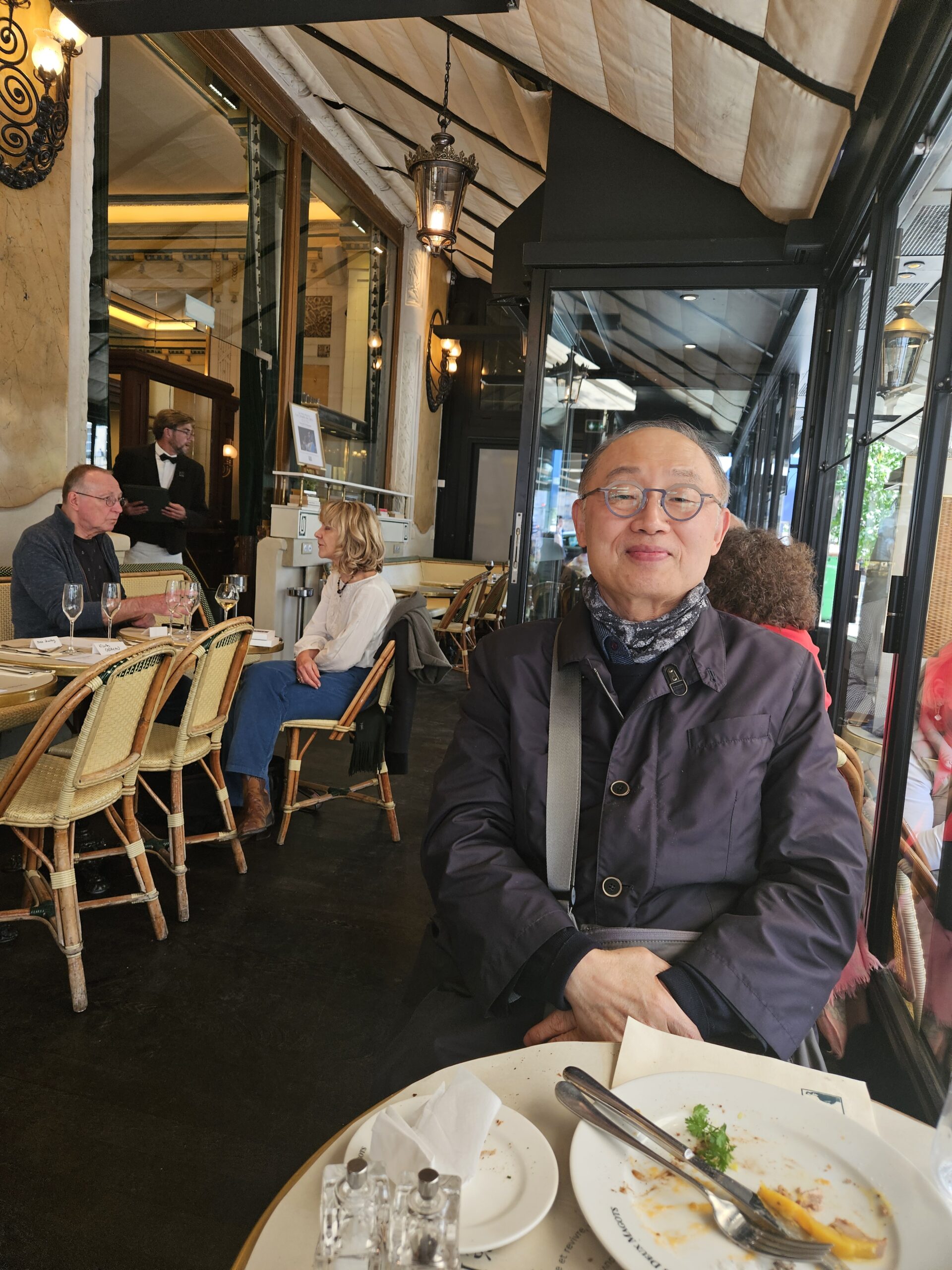
- Hi-Taek at Cafe Margot in Paris
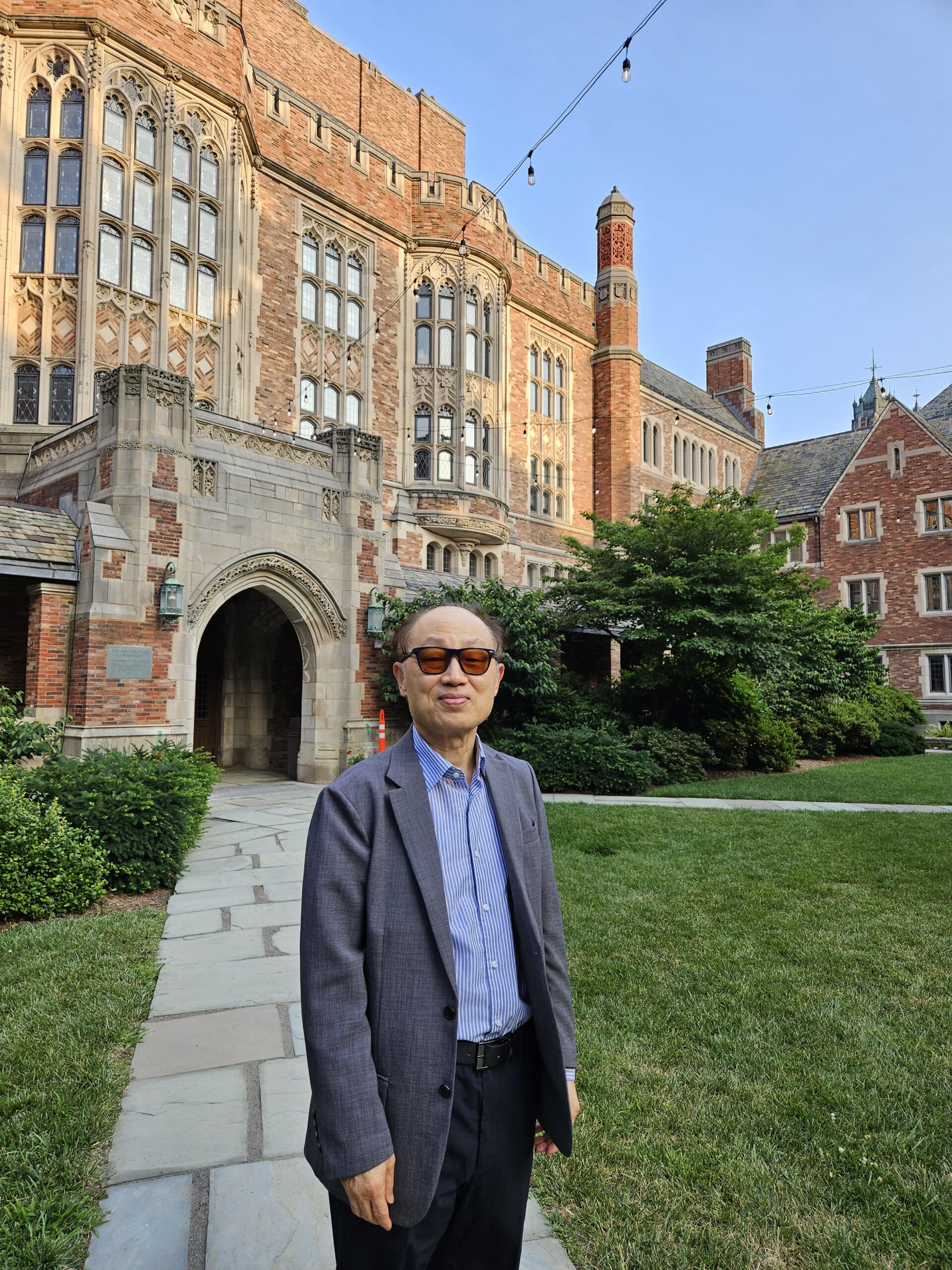
- Hi-Taek at courtyard of Yale Law School