Interviews
#10QuestionswithMaxwell Interview Series: Katie Chung, Baker Botts
Katie Chung is an international arbitration and disputes partner at Baker Botts based in Singapore. With nearly two decades of experience, Katie has advised and represented private and state-owned clients across many sectors in Asia related complex commercial and investor-state arbitrations conducted under all major arbitral rules and under both private and international law. Apart from acting as lead counsel, Katie regularly sits as arbitrator and has been appointed as arbitrator in HKIAC, ICC, KCAB and SIAC arbitrations seated in Hong Kong, Korea and Singapore. She is a delegate of the ICC Commission on Arbitration and ADR, a member of the AAA-ICDR Singapore Committee and serves on the executive committee of the Asia-Pacific Forum for International Arbitration. She also contributes to the IBA Task Force on “The Nationality of the Arbitrator as a Proxy for Independence and Impartiality”, and is a member of the Singapore Branch of the International Law Association. A regular speaker and author on international arbitration, she is widely recognized for her leadership and expertise in the field.
Read the full interview below:
Q1: You have shared previously that you knew you wanted to be a dispute resolution lawyer from the age of 12. What was it that drew you to dispute resolution so specifically, so early? And looking back now, how has your perspective of the meaning of dispute resolution changed from then until now?
My “origin story” as an international arbitration lawyer is rather pedestrian: first, when I was around 11 years old, I started reading books written by American author John Grisham (who practiced law before writing full time) in the 1990s, which featured lawyers as protagonists. Through reading those books, I became intrigued by the legal industry, litigation and law as a subject. Second, I thought I was probably going to be better at problem-solving than problem-preventing (i.e. transactional work). As an adolescent, dispute resolution meant local courts (or perhaps courtroom legal dramas like “Boston Legal”). But now dispute resolution means understanding the client’s core issues and finding commercial solutions, whether in the local or international commercial courts, international arbitration or mediation.
Q2: What are the key trends you’re observing in international arbitration today, particularly in Asia-Pacific?
Some key trends I’m observing include: an increase in LNG price reviews and eventual arbitrations in the Asia Pacific, particularly as negotiation windows open and contracting parties see commercial benefits in invoking price review provisions in the midst of market volatility; an uptick in Asia-Pacific centered investment treaty arbitrations with Asia-based counsel, which reflects the growing sophistication and depth of the arbitration bar in the region; and disputes arising out of the tech sector, intellectual property (e.g. life sciences, licensing, R&D collaborations) and potentially in the digital infrastructure space.
Q3: You started a new chapter at Baker Botts earlier this year. What influenced your decision to make this shift?
Baker Botts has been steadily building a strong presence in Singapore, particularly across the energy and digital infrastructure sectors. Its deliberate and sustained investment in Asia makes this an exciting time to join the firm and contribute to a distinguished international arbitration team. Aside from the opportunity to develop Baker Botts’ international arbitration practice in Singapore and the wider region, its global disputes platform, industry depth and collaborative culture influenced my decision to take the next step in my career here.
Q4: You have contributed actively over the years to shaping the Asia-Pacific arbitration community.What does a healthy, thriving Asia-Pacific arbitration community look like to you, and where do you see the most important gaps that still need to be addressed?
We have a vibrant international arbitration community in Singapore which includes academics, arbitrators, arbitral institutions, counsel and experts, who regularly interact at events, private roundtable sessions and other informal gatherings, and contribute to thought leadership on international arbitration. With international arbitration being taught at the undergraduate level at the National University of Singapore and Singapore Management University, this helps to garner interest and grow the talent pipeline in international arbitration. Applying these to the Asia-Pacific arbitration community, two important gaps that may be worth addressing are (i) capacity building in the future generation of lawyers by teaching international arbitration at the undergraduate level in more law schools in the Asia Pacific; (ii) developing thought leadership in the arbitration laws of jurisdictions in the Asia Pacific (noting most of them have enacted legislation based on the UNCITRAL Model Law on International Commercial Arbitration).
Q5: Do you think that, in international arbitration, cultural awareness and sensitivity can be just as important as legal strategy? Has any particular experience shaped your perspective on this?
The practice of international arbitration in Asia has grown tremendously over the last 15 to 20 years. The result of this growth is a greater number of nationalities represented in international arbitrations, whether as arbitrating parties, arbitration counsel, arbitrators, experts, tribunal secretaries or administrators in arbitral institutions. Insofar as an international arbitration matter is not culturally homogeneous (namely among arbitrating parties), cultural awareness and sensitivity are part of a holistic legal strategy, from the nomination or appointment of co-arbitrators and presiding arbitrator, to the choice of fact witnesses, experts and arbitrating counsel. There have been cases which I have handled in the past where I thought we could have benefited from the appointment of a sole or presiding arbitrator who was more closely attuned to the business cultures at play.
Q6: Technology and AI are becoming increasingly integrated into the arbitration process; from document review and legal research to emerging issues such as AI-generated evidence and AI-assisted decision-making, with many more developments likely to come. What opportunities and challenges do you think these developments present?
Technology is ubiquitous to the arbitration process, and became increasingly more so after the COVID-19 pandemic. Examples include the use of document review platforms or e-bundling applications, particularly in document-heavy arbitrations. Virtual hearings became increasingly common in international arbitrations during and after the pandemic.
In the last few years, the use of AI in international arbitration has presented opportunities in cost and time efficiency, particularly in transcription, document review and case management. E.g. AI can be used to review documents and create a chronology of events, identify specific documents in a voluminous record that are relevant and material to certain issues in dispute and conduct legal research if it is linked to legal research platforms. Certain arbitration-specific AI tools either on or soon to be on the market will help arbitrators and counsel with case management or the preparation of administrative parts of an award. Some of these AI tools are able to come up with cross examination questions based on the arbitration record and existing hearing transcripts.
These developments present at least three challenges: (i) the level playing field argument, where one side’s counsel may have access to sophisticated AI tools, but the other side’s counsel does not; (ii) confidentiality, where users of AI tools will need to ensure such usage is within a closed loop system to avoid disclosure of confidential information in the public domain; and (iii) evidential issues around assessing the probative value of AI-generated content and its admissibility.
Q7: Your practice covers both traditional sectors and newer industries such as renewables, digital infrastructure, technology and crypto. Have you recently seen new or different types of disputes emerging from these industries?
We have seen (among others) construction disputes arising out of offshore wind farm projects in the region, disputes concerning digital assets and those arising out of digital infrastructure. In the oil & gas sector, we have seen decommissioning disputes either concerning the decommissioning of offshore oil & gas assets or a local law requirement to put up decommissioning security in advance of decommissioning work. More recently, we have seen disputes arising out of the construction of data centres and issues emerging in the energy sector as a result of the Middle East conflict.
Q8: Could you share some advice to aspiring individuals who might want to pursue a career in ADR?
ADR (alternative dispute resolution) is about finding legal and commercial solutions to a client’s problems, whether through international arbitration, mediation, negotiation or expert determination. Some tips for pursuing a career in ADR: first, build a strong legal foundation in law school, including studying subjects (aside from the mandatory courses) that would be useful in ADR like conflicts of law, international commercial arbitration and investment arbitration.
Second, seek out internship opportunities in order to find out whether you are suited to a career in ADR, whether with law firms, arbitrators, or arbitration institutions, and be open to the type of work you’re given in such internships. Apart from ostensibly being a time in which one might try to secure future employment, such internships provide aspiring individuals with opportunities to build connections and relationships with those who you’re working with. Over time, these relationships help to broaden your circle of friends and professional network.
Third, wherever you are, focus on doing excellent work, being reliable and a decent person to work with.
Fourth, read widely and stay curious about current events and different industries. Disputes rarely arise in a vacuum, so it helps to have some knowledge of what’s going on in the world and how different industries are developing.
Q9: What has been the most rewarding aspect in your career, and what keeps you motivated??
One highly rewarding aspect of my career is having the opportunity to help clients navigate difficult, high-stakes situations and reach some form of resolution. The intellectual rigour of unpacking a new and interesting legal problem and coming up with solutions keeps me motivated.
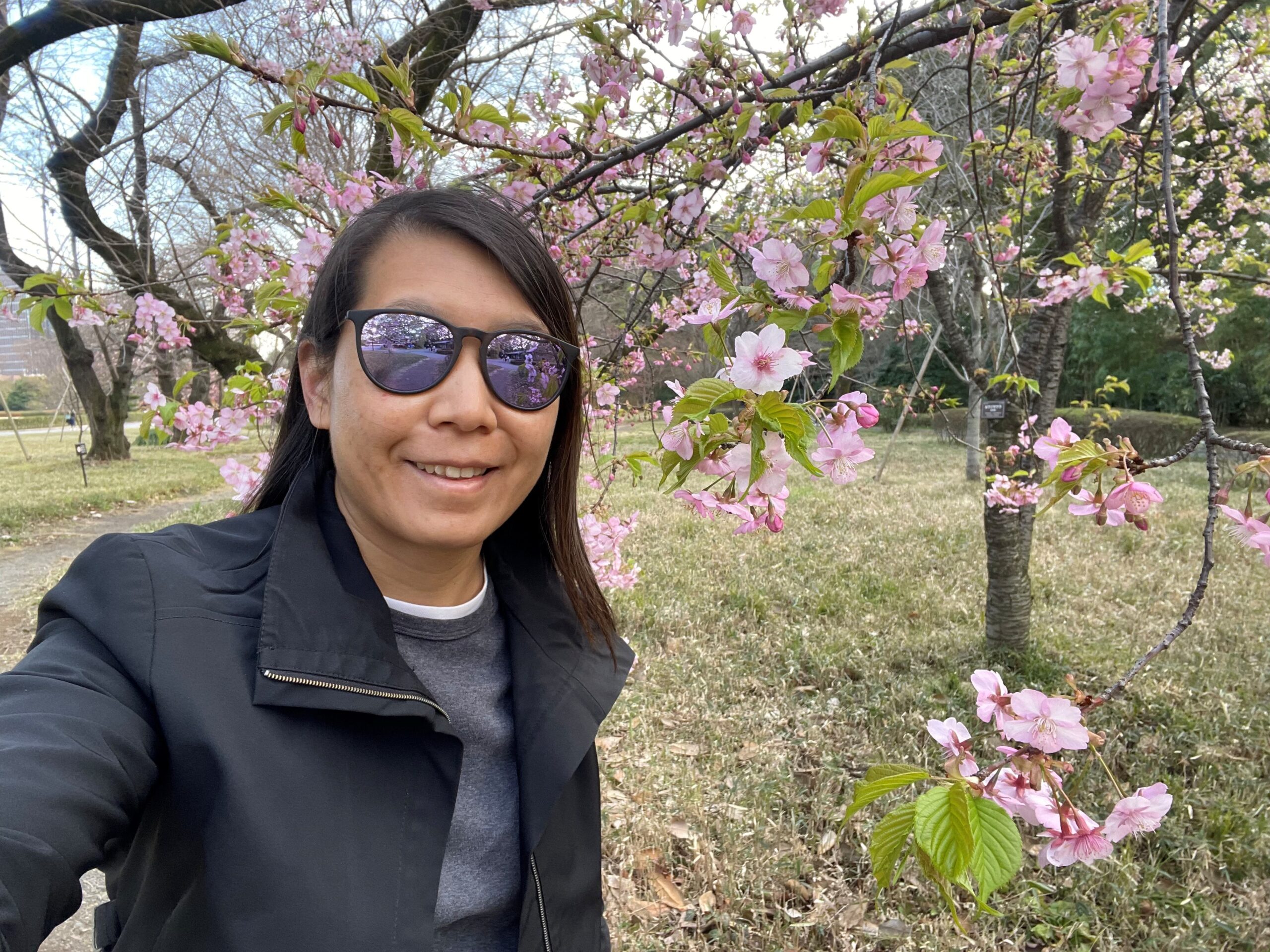
Q10: To get to know you more on a personal level, tell us 3 fun/interesting facts about yourself
Outside of work and, where time permits, I go scuba diving, hiking, or skiing.
From left to right:
- sightseeing in Japan
- hiking in Hong Kong